Product-building guide (continuously updated)
A complete, hands-on product-building handbook for indie developers — from inspiration, competitive analysis, design, development, and launch to growth, monetization, and a practical, actionable methodology.
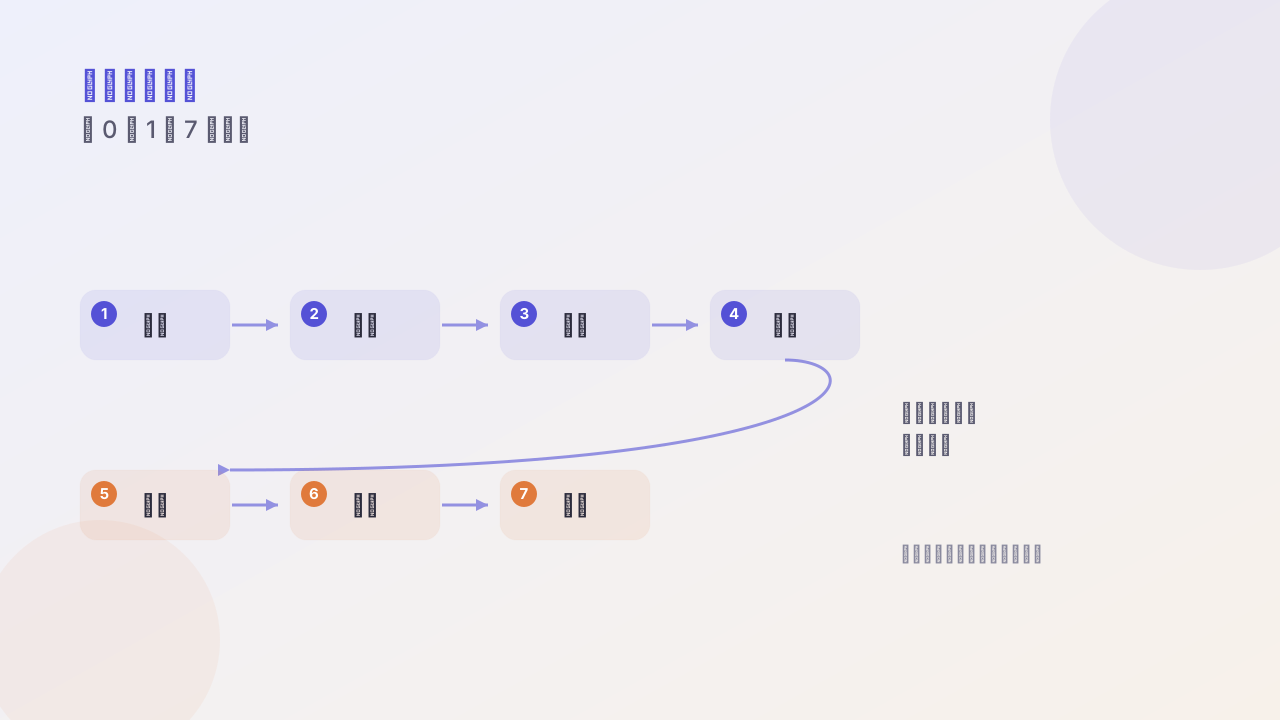
This is a hands-on handbook that I’ll keep updating. I break the 0-to-1 product process into seven stages, each answering just one question.
Note: this isn’t a theoretical framework; it’s an action checklist I compiled after hitting real potholes in actual projects.
Stage 1: Inspiration — where to find problems worth solving
Good product ideas usually come from three places:
- Trouble you keep running into yourself (most reliable)
- Problems others are solving with clumsy methods (easiest to validate)
- New possibilities opened up by newly emerged capabilities (highest risk, highest payoff)
There’s only one filter: is someone already solving this problem with a clumsy method? If yes, it means the demand is real and the existing solutions aren’t good enough.
Stage 2: Competitive analysis — figure out who you’re fighting
Don’t just look at “is there a similar product”; look at three things:
| Dimension | Question to answer |
|---|---|
| Who are the users | their willingness and ability to pay |
| What they got wrong | which complaint shows up most often |
| What they deliberately don’t do | this is your window of opportunity |
The third is the easiest to overlook. When a competitor doesn’t do something, it’s often not that they didn’t think of it, but that doing it would hurt their core business model — exactly the gap for a small team.
Stage 3: Design — validate at minimal cost first
Before writing code, do these three extremely cheap things:
- A landing page that clearly states what problem you solve
- An email subscription box, to see how many people will leave their email
- One real conversation — talk to 5 target users
If the landing page’s subscription conversion is below 2%, don’t write code yet.
Stage 4: Development — the ability to subtract
Solo developers most often die from feature creep. The rules:
- The first version does only one core flow
- Any “let’s just add this too” feature goes into the backlog; revisit it in two weeks
- Buy rather than build; use handwritten config rather than a backend UI
MVP = the **shortest** path for the user to reach core value
      ↑ not the smallest feature set, but the shortest path
Stage 5: Launch — shipping is not the finish line
Launch checklist (ordered by importance):
- A headline and above-the-fold that clearly state the value
- A 30-second usage demo
- One clear next-step button
- Contact info (so people can reach you)
- Basic analytics (know where users come from and where they drop off)
The 5th is often skipped, but it determines whether all your later optimization has any basis.
Stage 6: Growth — do the compounding things first
Ordered by compounding effect:
- SEO / content: one investment, long-term traffic
- In-product word of mouth: nail the sharing experience, users spread it themselves
- Community: slow, but forms a moat once it forms
- Paid acquisition: needs LTV figured out first, or it’s just burning money
Solo developers should put 70% of their energy into the first two.
Stage 7: Monetization — pricing is an experiment
Common mistake: pricing by cost. The right approach is to price by the loss the user avoids.
- A tool that saves 2 hours/week can be priced at $10/month
- A tool that earns someone $1000/month can be priced at $50/month
Pricing isn’t calculated; it’s tested. Adjust every 3 months, change only one variable at a time.
Update log
2026-08-20: added Stage 6 growth-channel ordering2026-07-02: rewrote Stage 3, emphasizing pre-validating with a landing page2026-05-10: initial version
Follow me