The difference between Chat, Work, and Codex — and when to use each
Explains how Chat, Work, and Codex differ across positioning, entry point, execution environment, context, and deliverables, and gives a selection method from problem exploration to agent execution.

All three products look like they can “help you get things done,” but they solve problems in completely different ways. Pick the wrong entry point and you get “the stronger tool exists, yet you’re working the dumbest way.”
One-line distinction
- Chat: for thinking things through. It gives you answers and ideas, but doesn’t touch your stuff.
- Work: for producing deliverables. It generates docs, spreadsheets, and slides in its own environment.
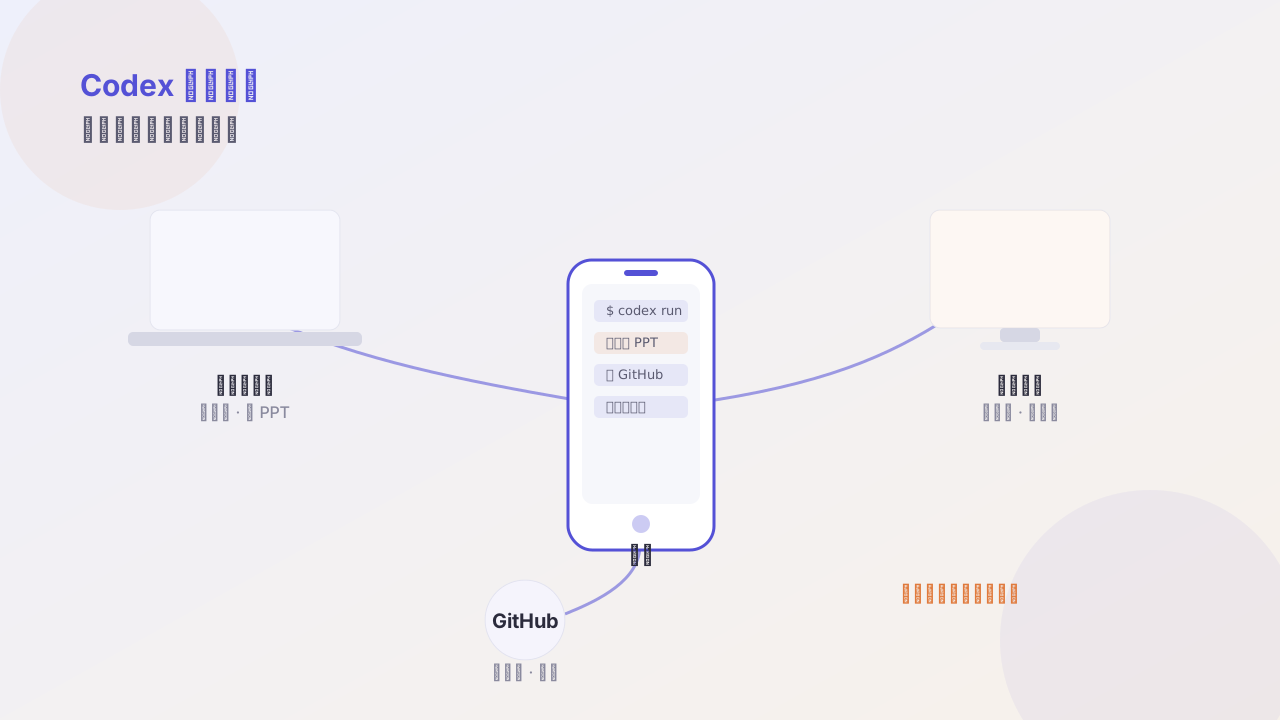
- Codex: for changing your stuff. It enters your real project directory, reads files, edits files, and runs commands.
Five-dimension comparison
| Dimension | Chat | Work | Codex |
|---|---|---|---|
| Positioning | conversational advisor | content generation | task execution |
| Entry point | web/app | web | app / CLI / IDE / cloud |
| Execution env | none | sandbox | your local directory |
| Context | what you paste in | what you upload | the whole project |
| Deliverable | text answer | finished file | code changes + runnable artifact |
How to choose: a decision path
- I don’t yet know what to do → Chat. Talk through the goal and constraints first.
- I know what I want, but the output is a doc/PPT/spreadsheet → Work.
- You know what you want, and the task lives in your own project → Codex.
There’s a very practical criterion: do you need to “edit a file.”
If you don’t, Chat/Work suffice; if you do, that’s when Codex belongs. A lot of people have Chat generate a pile of code and then copy-paste it by hand — which is essentially using human labor to compensate for the agent’s lack of execution ability.
A real combination
For an AI-industry daily brief, one workable flow is:
- Chat: first discuss the brief’s section structure and list of information sources
- Codex CLI: have it write the scraping script, build the project skeleton, get the build passing
- Chat: go back and review which sections got high read counts, adjust the structure
- Codex cloud: run on a schedule, auto-generate and push
Chat is responsible for “thinking,” Codex for “doing” — they alternate rather than being an either/or.
Common misconceptions
- Using Codex as a chat box: asking it “what do you think of this feature” is worse than having it read the code directly and propose a plan.
- Using Chat as an executor: it can’t see your project, so any plan it gives carries assumptions.
- Committing without reviewing the diff: agents make mistakes; you have to guard the permission boundary yourself.
Getting these three entry points’ responsibilities straight does more for your efficiency than studying any prompt trick.
Follow me