
Explains how Chat, Work, and Codex differ across positioning, entry point, execution environment, context, and deliverables, and gives a selection method from problem exploration to agent execution.

AI
Total 8 posts
Set up an AI knowledge base in Obsidian that can run first — organize a local Markdown vault, connect via a CLI agent, then validate the loop with two scenarios — accumulating materials and advancing projects.
Use an AI daily-news project to walk through the full Codex chain — from scaffolding, generating pages, iterating visuals, long-term memory, plugging in external info, to GitHub, deployment, and automated runs.
Explains Codex through five stages — entry point, execution environment, context, permission boundary, and deliverable — and combines them with a real case to show how App, CLI, IDE, and Cloud relate.
Appshots aren't ordinary screenshots — they hand the AI the current window's image, text, and app state, cutting the cost of copying, screenshotting, pasting links, and explaining the environment.
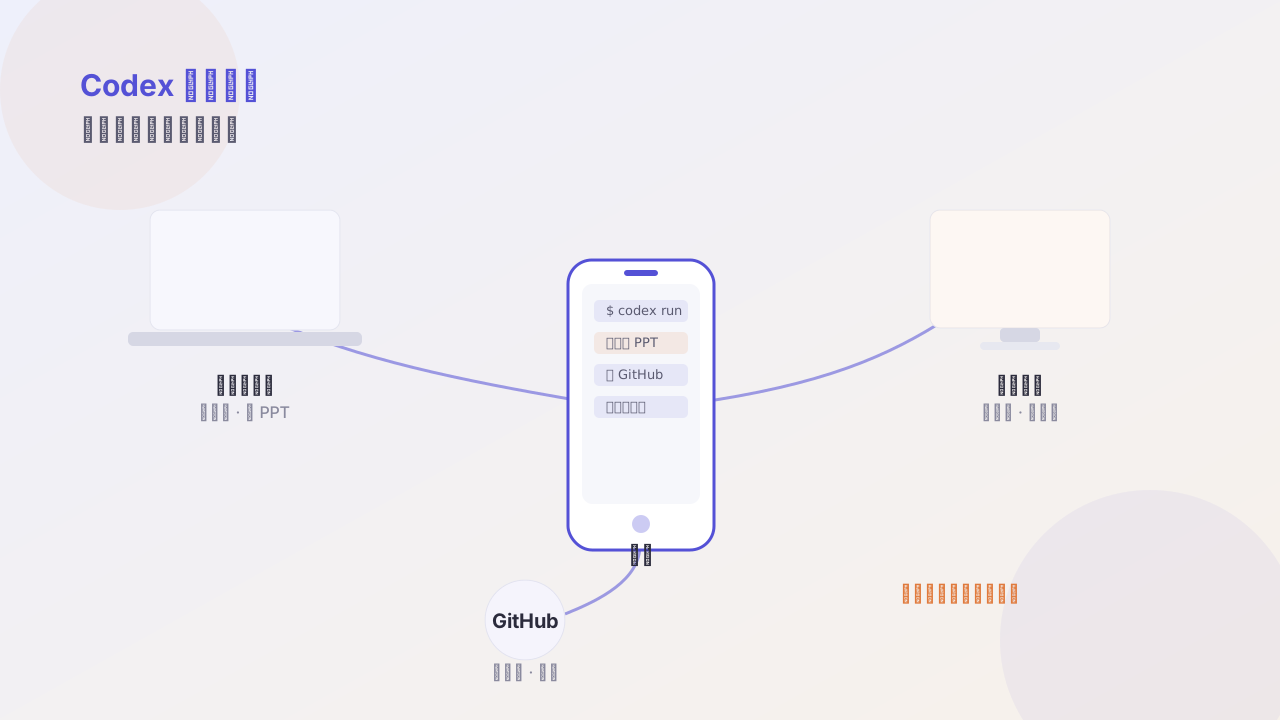
Three real scenarios — making a PPT from a phone, pushing to GitHub, and controlling one machine from another to run tasks — explain the remote-control setup method and its boundaries.
Turn a topic, notes, or PPTX into a single-file HTML presentation, with style preview, keyboard navigation, mobile swipe, PDF export, and one-click deploy.
A prompt library's value isn't in how many prompts you collect, but whether they can be retrieved and iterated. Covers structured writing, categorization, versioning, and actual usage.